Memphis residential zones feature architectural details like deep soffit overhangs in Central Gardens, historic tongue-and-groove porch ceilings in Midtown, and shaded brick weep channels in East Memphis that…
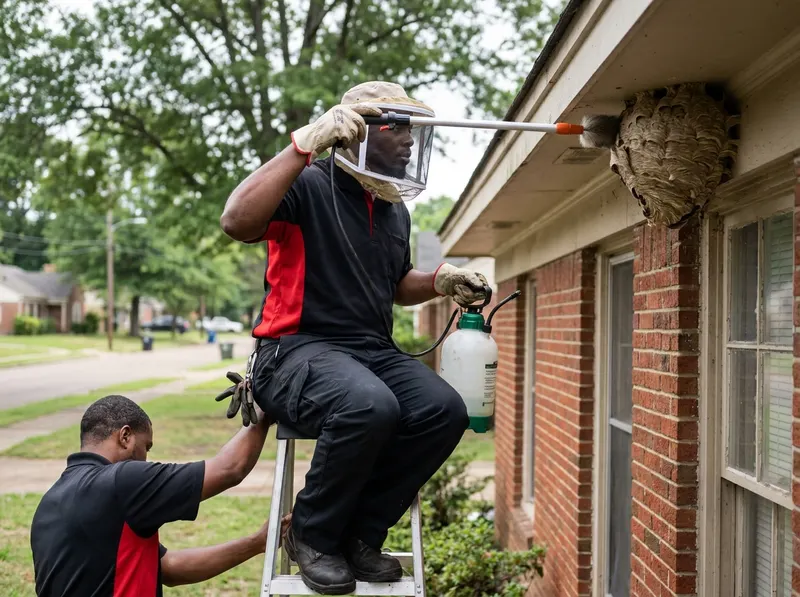
Memphis residential zones feature architectural details like deep soffit overhangs in Central Gardens, historic tongue-and-groove porch ceilings in Midtown, and shaded brick weep channels in East Memphis that accelerate colony construction from April through late October. High summer heat combined with Mississippi River humidity causes nest proliferation where high-cellulose wood framing meets humid ambient air. Ground nests commonly establish beneath landscaped root zones near Shelby County property lines, while aerial species nest under cornice returns in High Point Terrace and Cooper-Young bungalows. Stinging insect colonies defend brood zones aggressively; standard hardware-store repellant sprays disperse the defensive perimeter without neutralizing the core queen, often driving defensive insects deeper into wall cavities or attic insulation voids.
Technicians resolve structural infestations through non-broadcast, targeted interventions. Subterranean nests excavated by eastern yellowjackets receive micro-injected insecticidal dusts regulated by the EPA, which workers track through inner galleries to eliminate the foundational queen. Structural voids behind cedar shingles in Chickasaw Gardens or hollow exterior vinyl siding in Berclair require precise fiber-optic cavity location before mechanical deactivation, preventing unnecessary wall penetration. Technicians adhere strictly to OSHA ladder safety standards when operating at secondary rooflines in Harbor Town and Whitehaven, eliminating fall hazards near energized service drops.
Executing physical nest detachment rather than relying on chemical deactivation alone prevents secondary household infestations. Abandoned insect comb containing unhatched pupae or lipid reserves rapidly attracts secondary scavengers, including dermestid carpet beetles, warehouse beetles, and structural ants. Technicians scrape mounting pedicels down to the raw substrate, clear cellular refuse, and apply non-staining surface barriers according to NPIC environmental safety directives. All personnel utilize full-body vented protective suits rated under the NIOSH personal equipment standards to neutralize defensive stings safely near residential gathering areas.
Every job gets a firm, written price after a free on-site visit.
Tell us about your stinging insect nest removal job in Memphis and we'll send a clear, written quote, usually the same day.
 GraniteWing Pest Care