Thermal bed bug extermination relies on lethal structural heating to eradicate Cimex lectularius without damaging building framing. High-capacity convective air systems elevate interior zones between 122°F and 135°F,…
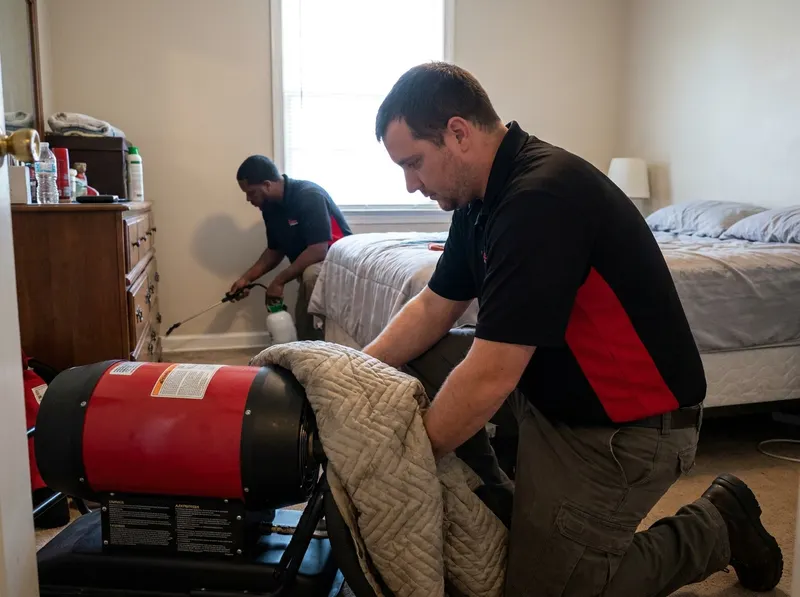
Thermal bed bug extermination relies on lethal structural heating to eradicate Cimex lectularius without damaging building framing. High-capacity convective air systems elevate interior zones between 122°F and 135°F, adhering to standards set by the United States Environmental Protection Agency. This temperature threshold denatures insect cellular proteins and desiccates egg casings hidden within structural recesses. In multi-story properties throughout Midtown and historic bungalows across Central Gardens, bed bug populations frequently migrate into plaster wall cavities, subfloors, and framing joints. While standard surface treatments fail to access these enclosed spaces, forced convective thermal energy penetrates through baseboards, structural lath, and thick fabric layers. Technicians place digital thermocouple sensors and infrared monitoring gear throughout treated spaces to confirm every structural void sustains lethal thermal exposure for at least 90 minutes. To cross-reference regional pest dynamics, the University of Kentucky Department of Entomology documents that structural bed bug eradication demands total void heating to prevent survival in cold spots.
Thermal remediation requires pairing with long-lasting chemical residual barriers to establish complete physical defense. High temperatures drive insect movement outward toward cool exterior wall voids; therefore, GraniteWing Pest Care pairs convective thermal cycles with localized applications of long-lasting non-repellent formulations and desiccant dusts. Applying microencapsulated compounds along baseboards, switch plates, and plumbing penetrations aligns with recommendations from the University of Tennessee Extension for managing pesticide-resistant strains. This mechanical-plus-chemical barrier eliminates edge-case survival, ensuring insects crossing perimeter bands weeks later encounter lethal active ingredients. Technicians establish clear containment boundaries to prevent migration between connected living units, a critical measure in dense residential corridors along Cooper-Young and Harbor Town. Controlled environmental protocols defined by the National Pest Management Association verify that pairing heat with targeted chemical barriers limits re-infestation risks in multi-family and attached housing structures.
Memphis exhibits extreme summer relative humidity that alters structural thermal mass, particularly in pier-and-beam foundations around Binghampton and slab constructions in East Memphis. High moisture levels elevate the energy load needed to reach target structural kill points. Technicians account for regional atmospheric loads by calculating structure cubic footage and utilizing specialized heavy-duty air movers to prevent thermal stratification. Home preparation follows concrete guidelines: residents remove heat-sensitive items, including aerosol cans, volatile compounds, wax items, and fine musical instruments, while leaving furniture, garments, and bedding inside the treatment zone for full decontamination. Guidance from the Centers for Disease Control and Prevention indicates that comprehensive physical heat application resolves infestations without requiring complete property disposal. For verified building safety, electrical equipment connections operate in adherence to the National Fire Protection Association NFPA 70, securing high-voltage distribution lines throughout the remediation cycle.
Structural variations between raised foundations in Berclair and sprawling brick basements in High Point Terrace require precise equipment calibration. Standard portable room units are insufficient for full-house thermal penetration; instead, industrial heat trailers and high-output electric delivery arrays generate steady thermal convection across 1,500 to 3,500 square feet. Structural safety protocols conform to occupational guidelines outlined by the Occupational Safety and Health Administration, maintaining continuous perimeter monitoring outside the structure during active heating cycles. GraniteWing Pest Care performs full chemical and thermal safety sweeps before declaring rooms ready for re-occupancy, following consumer chemical stewardship standards managed by the Tennessee Department of Agriculture. Technicians complete a follow-up assessment within 14 days, inspecting perimeter barriers to confirm zero active egg hatches or re-emergence in residential properties across Whitehaven and Chickasaw Gardens.
Every job gets a firm, written price after a free on-site visit.
Tell us about your bed bug heat and residual remediation job in Memphis and we'll send a clear, written quote, usually the same day.
 GraniteWing Pest Care