Crawlspace environmental encapsulation controls relative humidity beneath residential structures in Shelby County, preventing subterranean wood-destroying organisms from attacking subflooring and sill plates. In…
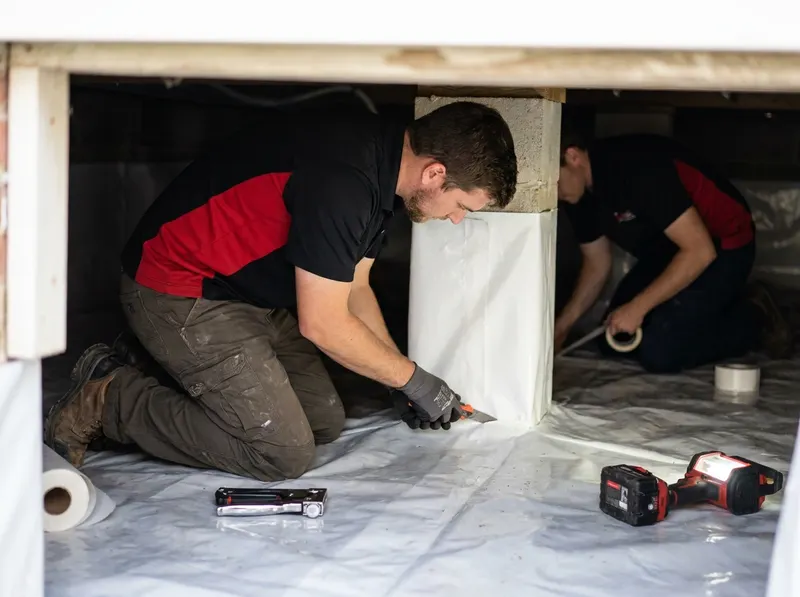
Crawlspace environmental encapsulation controls relative humidity beneath residential structures in Shelby County, preventing subterranean wood-destroying organisms from attacking subflooring and sill plates. In historic Midtown and Central Gardens, raised brick-and-mortar pier foundations directly absorb ground moisture from alluvial soils. Left unsealed, unconditioned foundation voids regularly exceed 70% relative humidity between April and October. This chronic dampness triggers attacks by subterranean termites, which require constant soil hydration, and invites American cockroaches migrating from older municipal sewer lines. By sealing earth beds with multi-mil polyethylene liners bonded to foundation perimeter walls, our team arrests upward moisture vapor transmission before fungal rot compromises subfloor joists.
Selecting encapsulation represents an intentional upgrade over basic loose-laid 6-mil plastic. Loose plastic leaves open soil margins and exposed piers, permitting subterranean termites to construct concealed shelter tubes along foundation footings. A fully conditioned encapsulation mechanically adheres heavy sheeting to concrete masonry units, incorporates closed-cell thermal barrier panels, and blocks open perimeter vents. Homes situated in low-elevation drainage pockets near High Point Terrace or Chickasaw Gardens benefit from pairing continuous encapsulation with dedicated interior crawlspace dehumidifiers regulated below 55% relative humidity to halt wood-decaying fungi germination.
GraniteWing Pest Care executes crawlspace conditioning using disciplined, multi-step barrier protocols: 1. Technicians clear biological debris, organic matter, and rotted wood from the entire soil surface. 2. Field personnel grade interior soil levels and install a Class A vapor retarder meeting ASTM International tensile benchmarks across the floor and up foundation walls. 3. Seams are sealed with waterproof polymer tape adhering to specifications outlined by the U.S. Department of Energy for conditioned crawlspaces. 4. Foundation vents are sealed against humid outdoor air infiltration in accordance with the International Code Council residential building codes. 5. Structural framing is assessed against moisture safety thresholds established by the USDA Forest Service Forest Products Laboratory.
Subterranean termite defenses integrated during the encapsulation process remain accessible for annual inspection requirements established by the Tennessee Department of Agriculture Regulatory Services. An unobstructed 3-inch inspection gap is maintained between the top of the vapor barrier and the wooden sill plate, ensuring subterranean termite activity remains readily detectable. Technicians also install commercial-grade moisture extraction units rated by the Air Movement and Control Association to stabilize air conditions around ductwork. Ground-level pest entry points, such as plumbing chases and pier joints, are sealed using physical exclusion mortars meeting the standards of the National Pest Management Association. Moisture remediation protocols align with structural preservation standards developed by the U.S. Department of Housing and Urban Development and mold mitigation guidance from the U.S. Environmental Protection Agency. For properties in Berclair or Cooper-Young requiring environmental mitigation, contact (901) 749-8014 for an accurate on-site assessment.
Every job gets a firm, written price after a free on-site visit.
Tell us about your crawlspace environmental encapsulation job in Memphis and we'll send a clear, written quote, usually the same day.
 GraniteWing Pest Care